
Where Boardwalk's data comes from
We turn public city and county planning filings into project records, each linked to its source so you can check it.
7-day free trial. No credit card.
From filing to project record
Find the filing
We check each place at least weekly, most of them every two to three days, for new agendas, minutes, and packets.
Pick out each request
AI picks out each request to build or change land use: rezonings, plats, site plans.
Build one project record
Each becomes one record of what, where, how big, and who filed it. Later filings update it.
Link to the source
The record links to the document it came from.
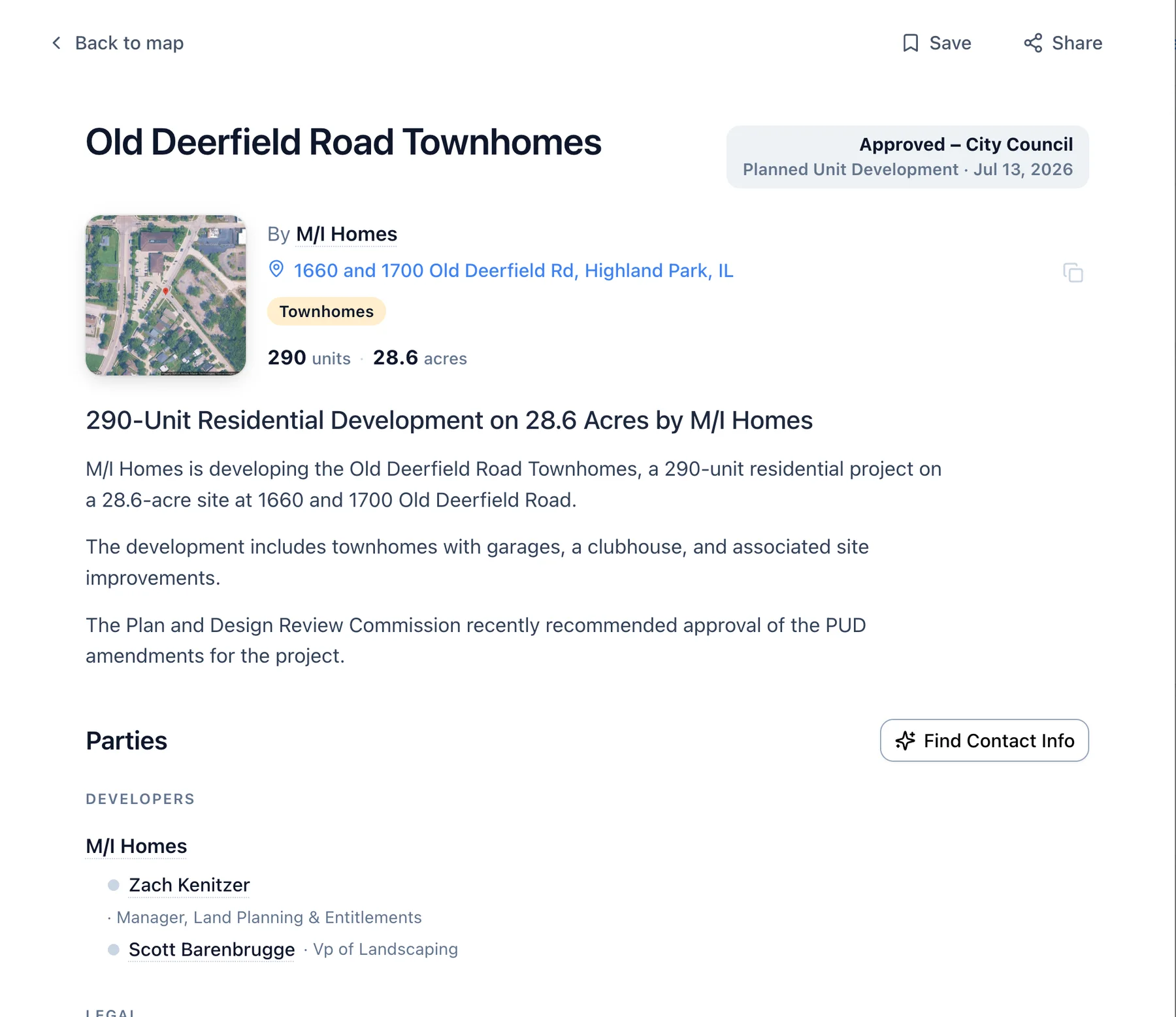
Source: City of Highland Park Plan and Design Commission minutes
What each field means, and where it comes from.Data dictionary
What counts as a project
One planned development, building, or road, followed across every filing about it.
Private development
Homes, stores, offices, and industrial buildings planned by private owners. On the map by default.
Public projects
Roads, schools, utilities, and public buildings. Off on the map until you turn them on.
Minor projects
Single homes, tenant finishes, and lot splits. Off on the map until you turn them on.
Boardwalk has 520,000+ projects with a public filing in the last 12 months, 160,000+ of them private development.
As of How we count
What's not included
Parcel boundaries
Parcel numbers when the filing lists them, but not maps.
Approval odds
Decisions the minutes record, never predictions.
Places we don't check yet
Some places' records we can't read yet. Check your area
Our promises
Each project shows its source
Open the original document from any record.
Empty means not stated
If the filing doesn't state a detail, the field stays empty.
We say what we add
Type, stage, and summary are our reading of the filing.
We fix mistakes
Send us the link if a record doesn't match its filing. Contact support